At the final hearing, more evidence came in.
Doreen’s complaint uncovered that the supervisor who closed those earlier cases had been closing hundreds without proper follow-up—claiming visits that never happened.
The courtroom shifted when that became part of the record.
Because the problem wasn’t a struggling mother.
It was a system that had been looking away until a child had to make an emergency call she should never have known how to make.
The most powerful testimony came from a recorded video of Juni.
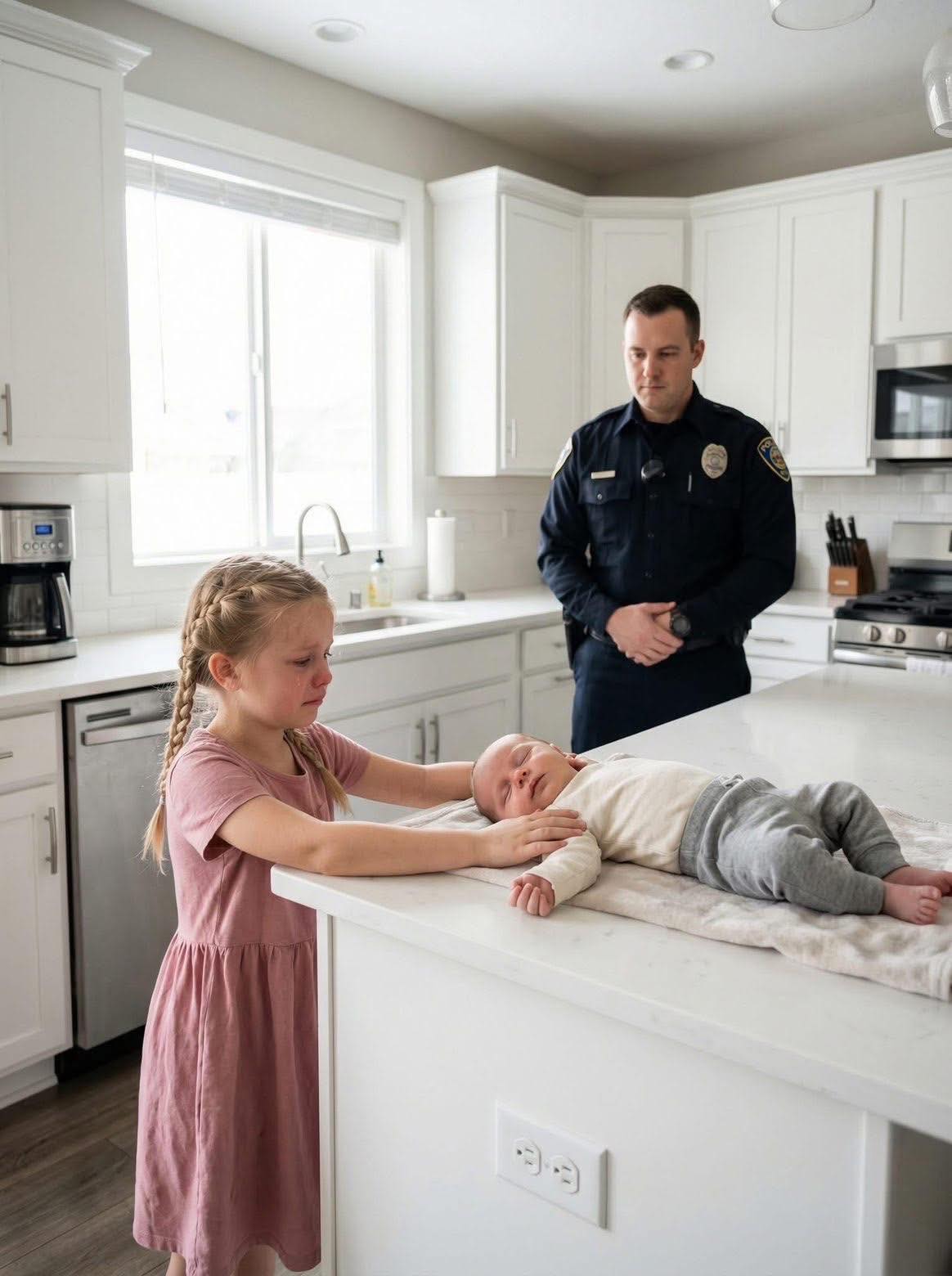
Small feet dangling above the floor. Hands folded in her lap like she was afraid movement might ruin her chance to be heard.
“My mom loves us,” Juni said, voice quiet but steady. “She was so tired she couldn’t hear me. I tried to help my brother. I watched videos and I tried and I tried. Officer Kincaid didn’t go away. I just want us together. I want someone to stay.”
When the video ended, silence filled the room in a way that felt human.
The judge looked at Tessa.
“Do you consent to temporary guardianship while you complete treatment and stabilize?”
Tessa stood, tears shining, voice clear.
“Yes,” she said. “He’s been there. And I’m going to do the work so I can be there the right way.”
The judge’s decision came without flourish.
“Temporary guardianship is granted to Officer Owen Kincaid for ninety days,” she ruled. “He will have authority to make medical decisions. Ms. Hale will complete the recommended program. Review in ninety days.”
Owen exhaled like he’d been holding his breath for weeks.
With guardianship in place, emergency funding moved faster. Charities could process the request. The hospital could proceed without custody questions tying everything up.
Within days, Rowan received the gene therapy Dr. Desai had been pushing for since the first night.
The change wasn’t instant. Bodies don’t heal on command.
But over the next months, Rowan gained weight—slow, steady, real. His breathing strengthened. Therapy appointments filled calendars. Progress came in inches, and Owen learned that inches add up when love refuses to stop counting.
Tessa completed her program and came back steadier—not magically fixed, not wrapped in a neat ending, but able to ask for help before she collapsed.
When she visited, she looked like someone learning to stand again.
One autumn afternoon, Owen spread a blanket in a small park where leaves turned gold and the air smelled like dry grass and distant fireplaces.
Juni ran through fallen leaves laughing the way children are meant to laugh—loud, unguarded, free.
Tessa arrived carrying Rowan, who was bigger now, still needing extra support, still working hard in therapy, but present.
Juni knelt beside him and let him wrap his tiny fingers around hers.
She grinned up at Owen like she was showing him a miracle she’d helped earn.
“He’s not getting lighter anymore,” she said.
Tessa sat down, watching her children, voice soft and shaking.
“I thought we were invisible,” she admitted.
Owen looked at them—imperfect, stitched together, real—and spoke the simplest truth he had.
“Not anymore,” he said. “Not while I’m here.”