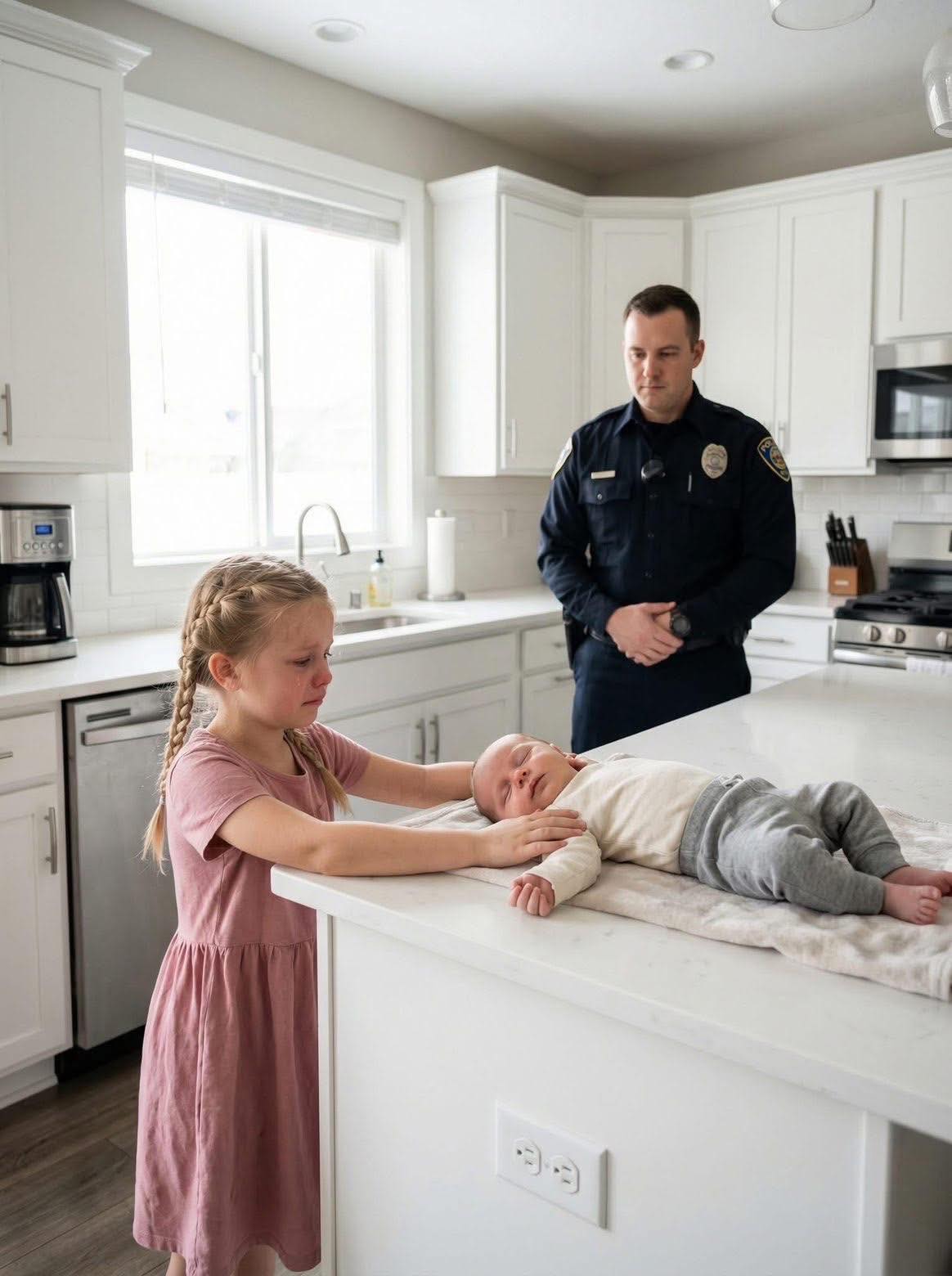
The dispatcher had done this long enough to believe she’d heard every kind of fear a human voice could carry.
She’d listened to callers scream until their throats went raw. She’d heard people curse, bargain, pray, go eerily calm in the middle of catastrophe like their minds had flipped a switch just to survive. She’d heard adults lie to sound brave, and she’d heard the kind of silence that meant someone was bleeding where they couldn’t see it.
But on a cold October day, with wind rattling thin glass somewhere at the far end of the line, a child’s whisper arrived that made her fingers pause above the keyboard as if the keys had turned to ice.
“My baby is fading,” the little voice said.
And then the whisper cracked—just a fracture, quickly swallowed—like the girl believed crying would waste time she couldn’t afford.
The dispatcher softened her tone the way she always did when a caller was small, because softness could be a rope. Softness could keep someone from falling.
“Honey,” she said, carefully, “tell me your name.”
“Juniper,” the girl whispered. “But everyone calls me Juni.”
“Okay, Juni. How old are you?”
“Seven.”
A pause, and behind it—so faint the dispatcher had to lean closer to the headset—came an infant’s cry. It wasn’t the strong protest of a hungry baby. It was thin, strained, the kind of sound you hear when a body is trying to ask for help with whatever strength it has left.
The dispatcher’s hand moved toward the send button.
“Whose baby is it, sweetheart?”
Juni answered as if the truth was obvious and heavy at the same time.
“Mine,” she said, then rushed to correct herself, panic spilling through the words. “I mean—he’s my brother. But I take care of him. And he’s getting lighter every day. He won’t drink. I don’t know what else to do.”
The call went out in seconds.
Because even in a small town, even on a quiet street, a sentence like that moves faster than sirens.
Officer Owen Kincaid was two blocks away when the radio crackled alive.
Twenty years on the job meant he didn’t startle easily. It also meant he recognized urgency when it wasn’t loud—when it was clipped, controlled, edged with something that told you the dispatcher was doing her best not to sound like she was afraid.
Something tightened in Owen’s chest as he turned onto Alder Lane.
The house didn’t look like the kind of place people filmed for social media outrage. It wasn’t trashed. It wasn’t boarded up.
It just looked… tired.
Paint flaking in patches. A front step sagging slightly toward the ground. Curtains hanging too still. A porch light that worked but didn’t warm anything.
Too calm.
Owen climbed the steps, knocked hard, waited, then knocked again.
“Police department. Open the door.”
Nothing.
He knocked a third time, and this time he heard it: a baby’s weak cry from somewhere inside, like it was trapped behind walls and time. Then a child’s voice floated through the wood—shaky, frayed, but stubborn.
“I can’t,” she said. “I can’t leave him.”
Owen closed his eyes for a beat. Not because he was frustrated. Because he understood.
This wasn’t defiance.
This was a child holding on to the only lifeline she believed existed.
“Juni,” he said, lowering his voice, “it’s Officer Kincaid. I’m here to help you. Open up, okay?”
“I can’t let go,” she whispered.
Training took over—the part of him that stepped forward when his heart wanted to run in and sweep everything into his arms.
He stepped back, braced his shoulder, and hit the door.
The old lock surrendered with a dull crack.
The smell inside wasn’t dramatic. No smoke, no rot, no obvious horror.
Just stale heat. Dish soap. Something faint and sour that might’ve been watered-down formula. The kind of smell that clings to a place where people are trying, failing, and trying again.
The living room was dim except for a small lamp in the corner, glowing like a tired moon.
And there she was.