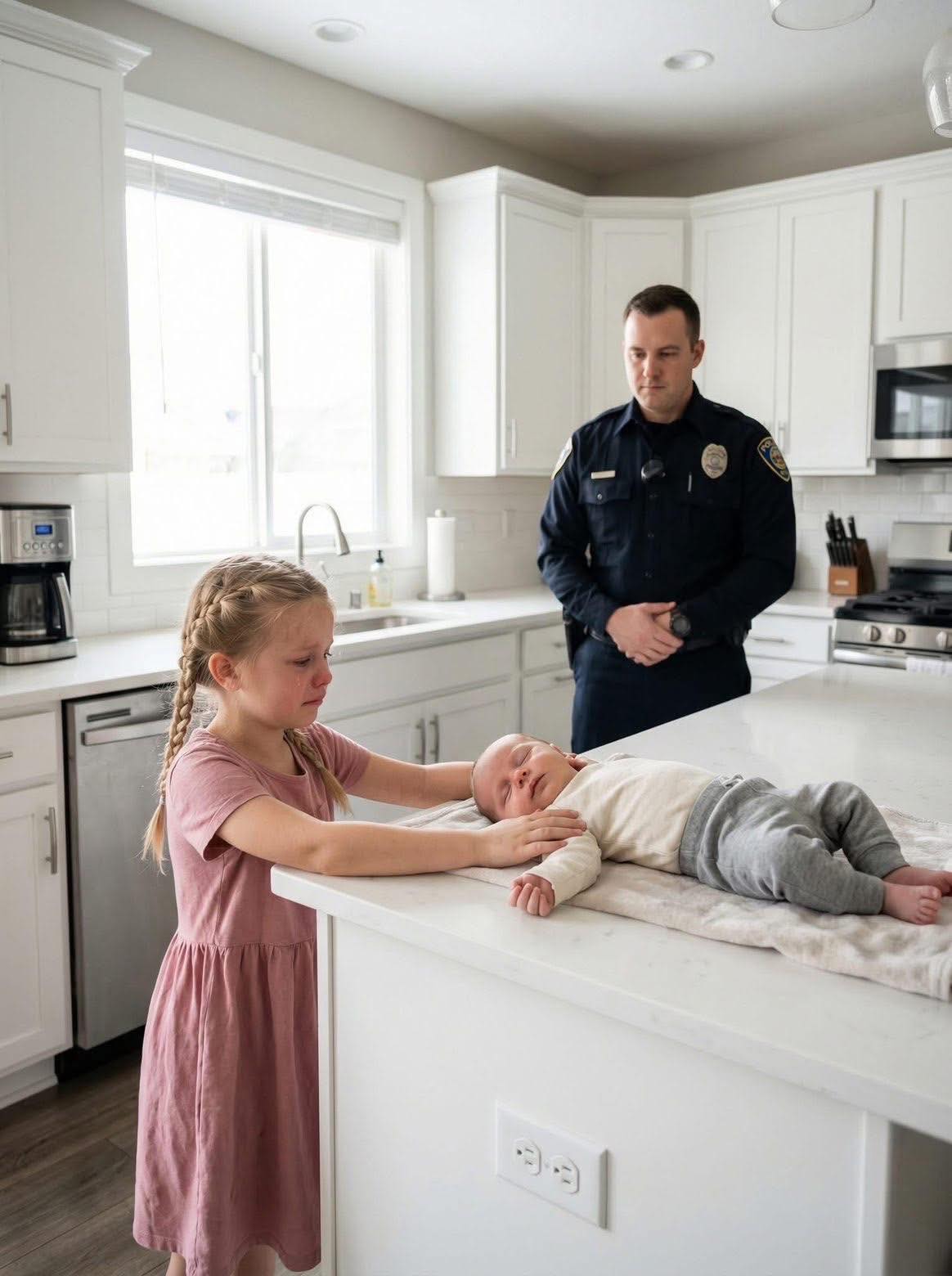
A pediatrician—Dr. Hannah Keats—took one look at Rowan and started calling orders before anyone finished introductions.
Nurses moved around the baby with quick hands and focused faces. Oxygen. IV fluids. Monitors beeping steady like they were trying to keep rhythm with a tiny heart.
Owen stayed near Juni, because she’d come in holding herself together with thread, and he wasn’t about to let the thread snap now.
The mother’s name was Tessa Hale. Her explanation came out like a confession from someone who couldn’t tell where the line between “struggling” and “failing” had been drawn.
“I work nights at the packaging plant,” she said, words spilling fast. “Sometimes doubles because rent doesn’t care if you’re tired. I thought I could keep up. I thought I could leave bottles ready. Juni’s smart—she’s always been smart—”
She broke on the last word.
“I didn’t mean—”
Owen didn’t interrupt. When people were drowning, they talked like that, grabbing at any sentence that might keep their head above water.
Dr. Keats stepped out after the initial exam. Her face held a careful seriousness—different from panic, different from judgment.
“We’re stabilizing him,” she said. “But I need to be honest. This doesn’t look like a straightforward feeding issue.”
Tessa’s eyes widened. “What do you mean? I fed him. I tried.”
“I believe you,” Dr. Keats said. “That’s why we’re running deeper tests. Something else may be affecting his strength and his ability to feed.”
Juni squeezed Owen’s hand so tightly it hurt.
“Is he going to disappear?” she whispered.
Owen crouched to her level, choosing his words like they mattered—because they did.
“He’s here,” he said. “And the doctors are working on keeping him here. You did the bravest thing by calling.”
Later that night, a pediatric neurologist arrived—Dr. Priya Desai—quiet focus in her movements as she checked reflexes and muscle tone, watching tiny responses most people wouldn’t know how to read.
Hours passed. Tests ran. Imaging. Lab work. More waiting.
Finally, Dr. Desai and Dr. Keats brought Owen and Tessa into a small consultation room that smelled faintly of disinfectant and old coffee.
Doctors didn’t gather people like that unless the truth was too big to deliver in passing.
Dr. Desai folded her hands and spoke with clarity wrapped in kindness.
“Rowan’s symptoms suggest a genetic neuromuscular condition called spinal muscular atrophy,” she said. “It affects the nerve cells that send signals to muscles. When those signals weaken, muscles don’t build the way they should.”
Tessa’s face went blank, like the words couldn’t find a place to land.
“Genetic?” she whispered. “So… I did this?”
Dr. Keats leaned forward, firm but not harsh.
“No,” she said. “This isn’t something you caused by working too much or being tired or making the wrong choice on the wrong day. Genetics doesn’t work that way. Blame won’t help Rowan breathe or grow.”
Owen watched Tessa shake as she tried to hold herself together and failed, and he thought about Juni’s words—he’s getting lighter every day—and how sharp children were when no one listened.
Dr. Desai continued.
“There are treatments,” she said. “Including a one-time gene therapy that can make a significant difference, especially when given early. Timing matters.”
Hope flashed in Tessa’s eyes through tears.
“Then we do it,” she said fiercely. “I don’t care what it takes.”
Dr. Keats exhaled slowly.
“The cost is in the millions,” she said. “Insurance approval can be difficult. And… there’s also a custody investigation because a seven-year-old was left to carry a responsibility no child should ever carry.”
The system arrived the next morning wearing procedure like armor.
A young social worker—Kelsey Raines—showed up with a tablet and a tight expression that looked like judgment disguised as policy.
“I need to interview the child separately,” she said. “We’ll be arranging temporary placement.”
Tessa’s face crumpled into something worse than panic—heartbreak.
“Please,” she said. “She didn’t do anything wrong. She was trying to help. I was trying to survive.”
Owen stepped in, careful but firm.
“If earlier neighbor reports were made,” he said, “they should have been followed up. If anyone had visited, they would’ve seen trouble long before a baby ended up in intensive care.”
Kelsey’s jaw tightened. “I can’t speak to older reports.”
And she walked away to make calls.
Later that day, another woman arrived—older, silver hair pinned neatly back, eyes warm but sharp.
“I’m Doreen Pruitt,” she said. “I’m taking over this case. This needs experience, not paperwork.”
When she reviewed the history, her face hardened.