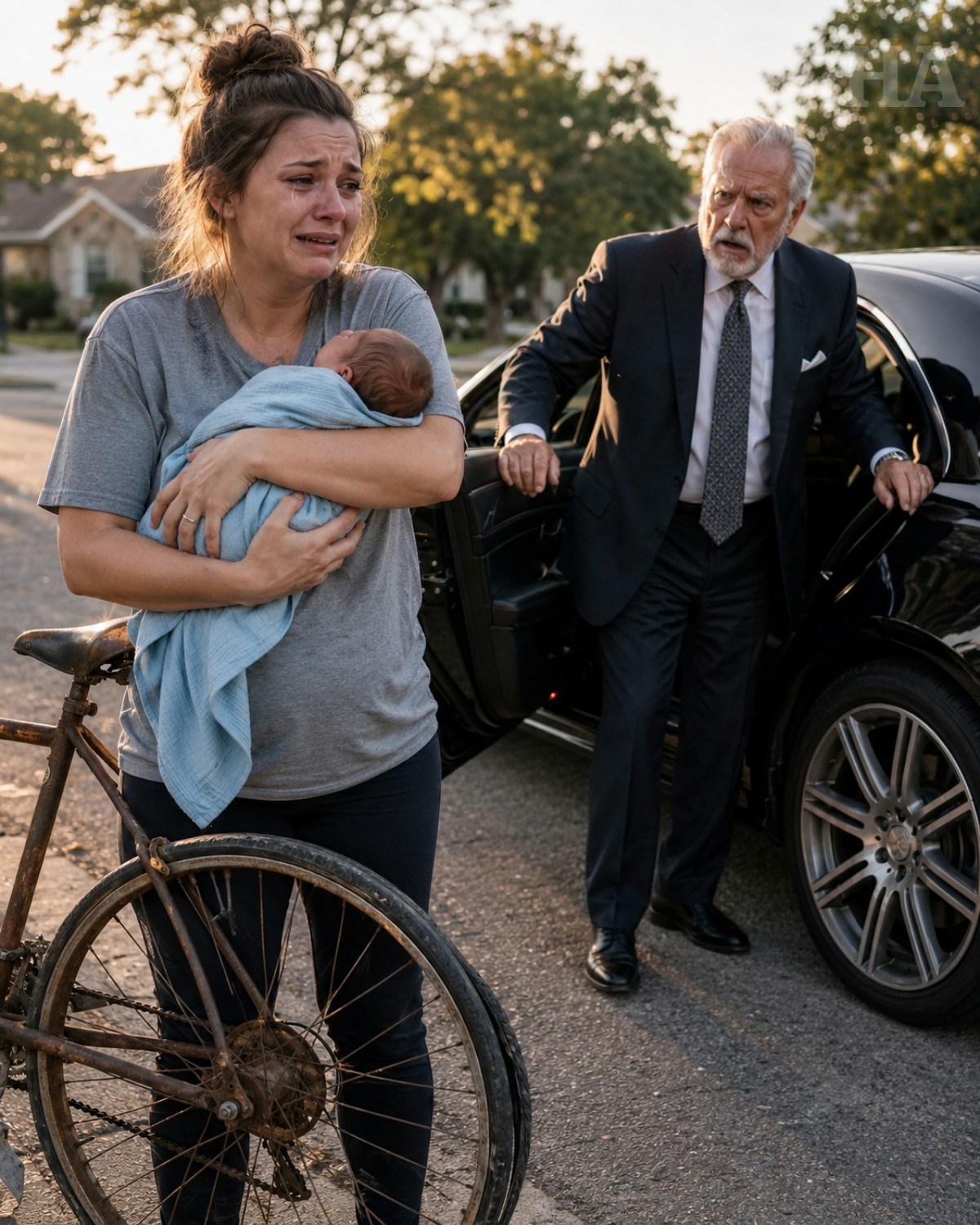
Nothing came out.
Because where was the beginning?
Was it when your mother took the Mercedes keys and said you were too hormonal to drive?
Was it when Fernanda posted a photo in your car with the caption “New mom life, but make it luxury,” and everyone assumed the car was hers?
Was it when your parents started opening packages addressed to you?
Was it when your mother said newborn formula was expensive and you should “learn to budget,” while Fernanda bought designer sunglasses with money from the account Miguel had sent for you and the baby?
Was it when your father said, “Don’t upset your mother,” every time you tried to speak?
Or was it earlier?
When you were a child and Fernanda cried if you got attention, and your mother always told you to give her whatever she wanted because “you’re older, Valeria, you understand more”?
You looked down at Santiago.
His tiny fist rested against your collarbone.
You thought of Miguel, your husband, hundreds of miles away at the naval base in Veracruz, believing you and the baby were being cared for.
That lie burned worse than anything.
“They took my phone most days,” you whispered.
Your grandfather’s hands tightened on the steering wheel.
“Who?”
“My mother. She says screen time makes postpartum anxiety worse. But really, she checks my messages before I can answer Miguel.”
He said nothing.
You continued.
“She tells him I’m resting. That I’m emotional. That I don’t want calls because I cry too much.”
“Do you?”
“Cry?”
“Yes.”
You almost laughed.
“Every day.”
His eyes flicked to you in the mirror.
“Because of the baby?”
You shook your head.
“Because I feel like a prisoner in my own parents’ house.”
The car became very quiet.
Outside, Guadalajara traffic moved around you in bright, careless noise. Buses exhaled smoke. Motorcycles cut between lanes. People carried groceries, flowers, backpacks, ordinary things.
And there you were, a married woman with a newborn, sitting in your grandfather’s car, finally saying out loud that the house everyone called your refuge had become a cage.
“They control the money,” you said.
“What money?”
“The account Miguel deposits into for me and Santiago. Mamá said I was too tired to handle bills, so she asked for access. At first I thought she was helping.”
“And now?”
You swallowed.
“Now I have to ask for everything. Diapers. Formula. Medicine. Even bus fare. She says I’m irresponsible if I question her.”
Your grandfather’s face did not change.
That scared you more than anger.
“And Fernanda?”
You looked out the window.
“She uses my things. Clothes. Makeup. The car. My stroller. She took the gold bracelet Miguel gave me when Santiago was born and said she needed it for a party because ‘I wasn’t going anywhere.’”
Your voice cracked.
“And when I said no, Mamá told me I was selfish. She said Fernanda had always felt less loved because I married well.”
Your grandfather breathed slowly through his nose.
“And your father?”
You laughed then, but it sounded broken.
“Papá says he doesn’t want problems between women.”
Your grandfather gave a small, bitter nod.
“A coward’s favorite sentence.”
You stared at him.
No one had ever called your father that before.
Not in your family.