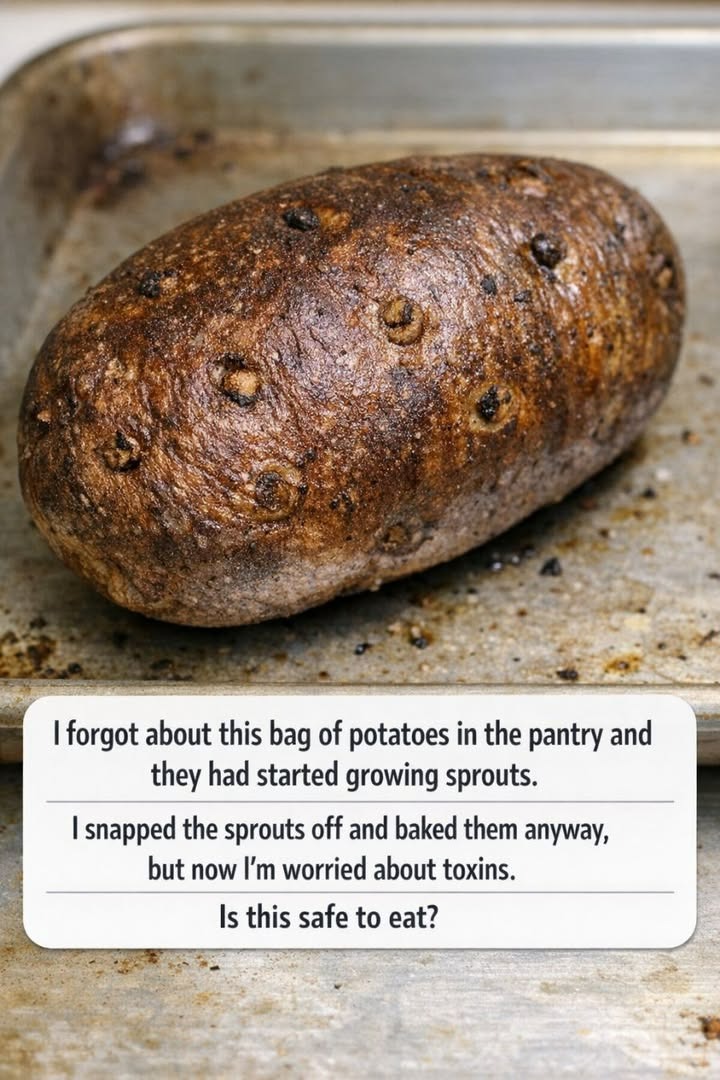
If the potato is still firm, it's generally safe to eat after proper preparation.
If the potato is wrinkled, shriveled, or soft, toss it. It's past its prime and may contain higher levels of solanine (a natural toxin).
The bottom line: Sprouting doesn't automatically mean the potato is toxic. But you need to prepare it correctly.
The Science Behind Sprouting (Why Potatoes Grow Sprouts)
Let me explain what's happening inside that forgotten bag.Fruits & Vegetables
Potatoes are living tubers—they're still alive when you buy them. They contain dormant "eyes" (buds) that are waiting for the right conditions to grow. When they're exposed to warmth, light, and moisture, those buds wake up and start growing into sprouts.
What's happening chemically: As the potato sprouts, it produces a natural toxin called solanine. This is the potato's defense mechanism—it makes the potato taste bitter and unpleasant to animals (and humans) who might try to eat it.
Discover more
Coconut Milk
Beverages
Flora & Fauna
Where solanine concentrates: In the sprouts themselves, in the "eyes" (where the sprouts grow from), and in any green patches on the skin (green indicates chlorophyll production, which often accompanies solanine).
The good news: The solanine concentration in the potato flesh itself is usually low. If you remove the sprouts and any green spots, the remaining potato is generally safe to eat.
Is Sprouted Potato Poisoning Real? (The Risks)
Yes, solanine poisoning is real—but it's rare and usually mild.
Symptoms of solanine poisoning:
Nausea, vomiting, diarrhea
Stomach cramps
Headache
In severe cases: confusion, fever, hallucinations (extremely rare)
Who is most at risk: Children, elderly, and people with compromised immune systems may be more sensitive.