Why Scent, Weight, and Texture Matter for Melons
Cantaloupe offers several helpful clues if you slow down for a few seconds in the produce section. Start by checking the surface. Bruises, cracks, mold, or soft spots can point to declining quality, and a healthy cantaloupe should feel solid and free from major damage.
Color is another important sign. Large green areas often suggest the melon was harvested before it fully matured. Many shoppers look for a warm tan or beige rind with very little green remaining. That appearance can indicate the fruit had more time to develop sweetness before it was picked.
Discover more
Cantaloupe
food
Watermelon
Weight can help when comparing similar cantaloupes. A melon that feels heavy for its size often contains more moisture, which may lead to a juicier texture. A noticeably light melon may be drier, though weight should still be considered alongside other signs.Cantaloupe
The blossom end, opposite the stem, is also worth checking. Press it gently. A slight give can be a good sign, while a completely firm end may point to underripeness. If it feels very soft, the melon could be overripe or deteriorating.
A ripe cantaloupe usually has a sweet, pleasant scent. If there is no aroma, it may not be ready. If the smell is overpowering, the fruit may have passed its prime.
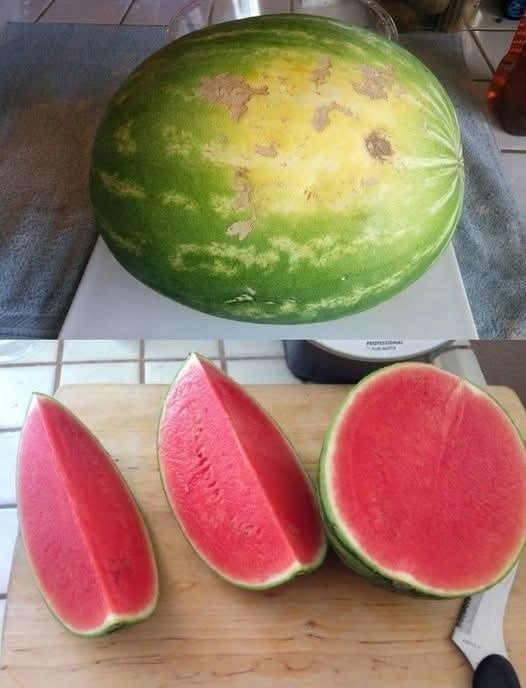
None of these methods can promise perfect fruit every time. Weather, harvest timing, shipping, and storage all affect what ends up in the grocery bin. But looking for field spots, checking firmness, comparing weight, and using scent can make shoppers more consistent.
The next time you shop for watermelon, pineapple, or cantaloupe, take a moment before placing one in your cart. A few small checks may help you bring home fruit that is actually worth cutting into.