A sister “borrowing” your car.
A father “keeping peace.”
A gift “shared” until the owner has nothing left.
A postpartum mother called unstable until she doubts her hunger, her memory, her right to leave the house.
Your grandfather did not save you because he gave you things.
He saved you because he believed what had been taken.
Then he acted like it mattered.
And that became the compass you carried long after he was gone.
Not the Mercedes.
Not the trust.
Not the legal victory.
The belief.
At the end of his life, Ernesto had told Santiago the truth:
His job was to believe you.
Now that became yours.
To believe women when they said help had become control.
To believe young mothers when they said something was wrong.
To believe your own body when it said hunger was not ingratitude.
To believe your own voice before someone else renamed it drama.
So when people asked why you kept that old car, you always smiled.
Because it was never about the Mercedes.
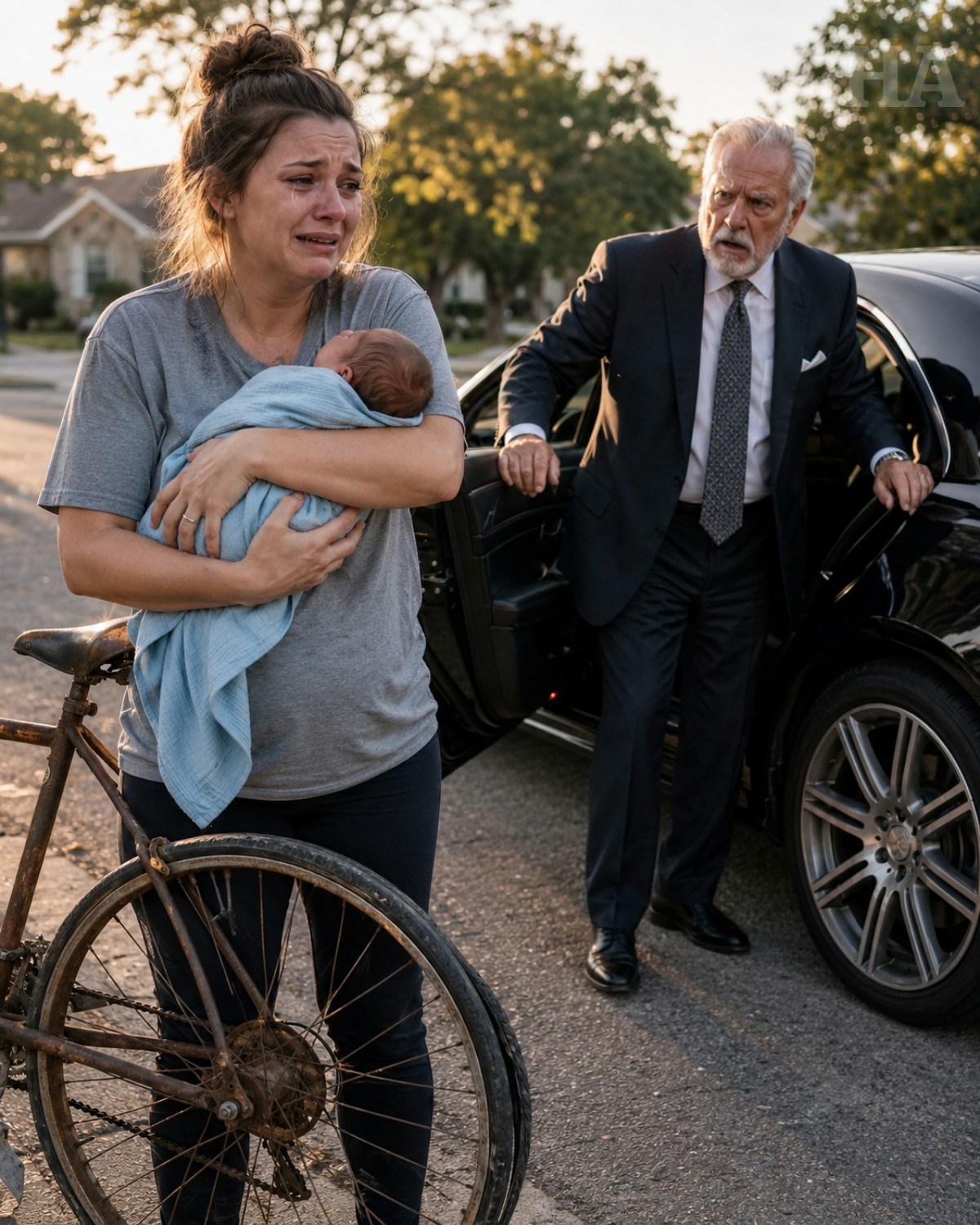
It was about the day your grandfather saw you pushing a broken bike with your newborn in your arms and refused to accept the picture your family had painted.
It was about the night he fixed it.
Not with shouting.
Not with revenge for show.
But with doctors, lawyers, bank records, keys, truth, and one sentence that still lived in your bones:
“Get in, Valeria.”
That was the night you stopped walking beside someone else’s permission.
And started driving your own life home.