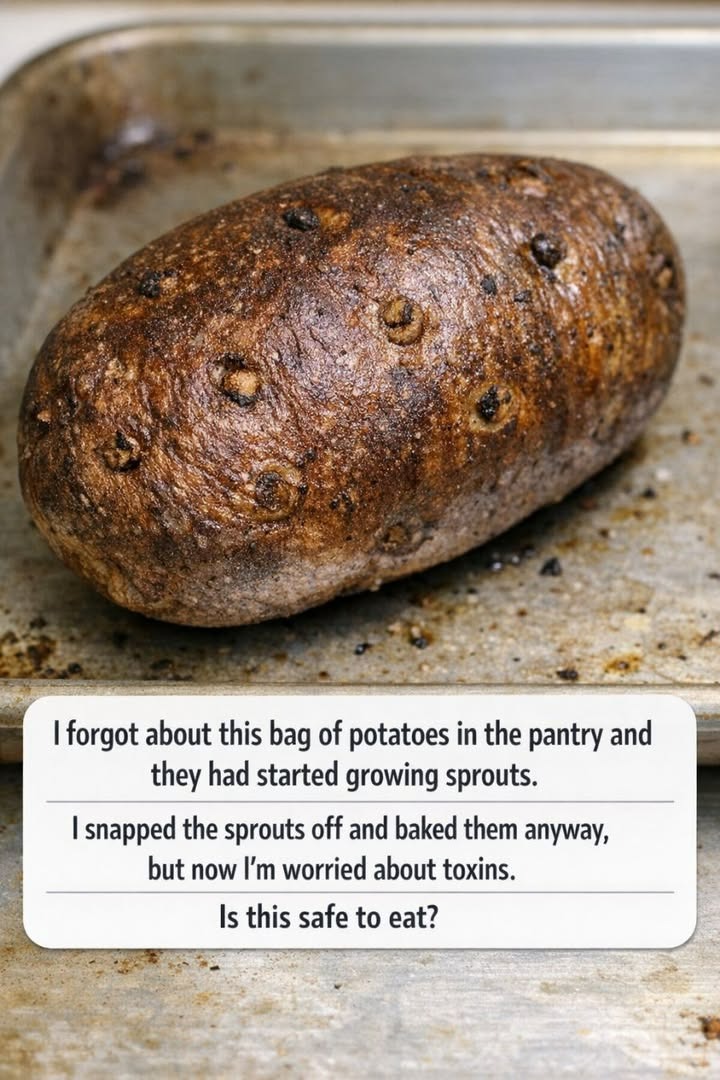
Toss the potato if:
It's soft, mushy, or wrinkled (signs of decay).
It has large green patches (more than 10-15% of the surface).
It smells bad (rotten, musty, or fermenting).
It has black spots or oozing liquid (signs of bacterial rot).
It's been stored for months and is clearly past its prime.
When in doubt, throw it out. A potato costs pennies. Food poisoning costs much more.
How to Prevent Potatoes from Sprouting (Storage Tips)
Let me help you avoid this problem in the future.Fruits & Vegetables
Store in a cool, dark place. Ideal temperature is 45-50°F (7-10°C). A basement, cellar, or cool pantry is perfect. Do not store under the sink (too warm and humid).
Keep away from onions. Onions release ethylene gas, which causes potatoes to sprout faster. Store them separately.
Don't refrigerate raw potatoes. The cold converts starches to sugars, affecting flavor and texture. It can also cause them to darken when cooked.
Use paper bags. Plastic bags trap moisture and promote sprouting and rot. Paper bags allow airflow.
Store in single layers. Don't pile potatoes on top of each other. Spread them out so air circulates.
Check regularly. Once a week, check your potato stash. Remove any that are sprouting or soft before they affect the others.
Frequently Asked Questions
Can you eat sprouted sweet potatoes?
Yes, the same principles apply. Remove sprouts and any soft or discolored areas. Sweet potatoes are in a different botanical family, but solanine isn't the concern—they produce other compounds. Still, it's best to remove sprouts and eat only firm, healthy portions.
Can you plant sprouted potatoes?
Absolutely! Sprouted potatoes are perfect for planting. Cut the potato into chunks, each with 1-2 sprouts. Plant them in soil, and you'll have homegrown potatoes in a few months.
Are sprouted potatoes safe for pets?
No. The solanine in sprouted and green potatoes is toxic to dogs and cats. Keep sprouted potatoes away from pets.
What if I already ate a sprouted potato?
If you removed the sprouts and green spots, you're likely fine. If you ate a whole badly sprouted potato and feel fine, don't worry. If you experience nausea, vomiting, or stomach cramps, contact your doctor.
Why do potatoes turn green?
Exposure to light triggers chlorophyll production (the green color) and solanine production. This is why potatoes should be stored in the dark.
Can I eat potato sprouts themselves?
No. The sprouts themselves have the highest concentration of solanine. Remove and discard them.
A Safe, Sprout-Free Conclusion
Here's what I want you to take away from this article.
That forgotten bag of sprouted potatoes doesn't have to go straight to the trash. If the potatoes are still firm, you can safely eat them—just remove the sprouts, cut away any green spots, and cook them thoroughly.
But if they're soft, shriveled, or heavily green, let them go. Compost them. Plant them. Or toss them.
Your health is worth more than a bag of potatoes.
Now go check your pantry. And maybe make a note on your calendar to check your potatoes every couple of weeks.
Now I'd love to hear from you. Have you ever eaten sprouted potatoes? Did you get sick? What's your favorite way to use up potatoes before they sprout? Drop a comment below – I read every single one.
And if this guide saved you from tossing a perfectly good bag of potatoes, please share it with a friend who needs the same advice. A text, a link, a conversation. Good information is meant to be shared. 🥔🌱🧑🍳