Carefully pour boiling water into the larger pan until it reaches about 1 inch up the sides of the springform pan. Do not get water inside the springform pan.Cream Cheese
Important: Boiling water only. Cold or warm water will lower the oven temperature too much.
9. Bake Low and Slow
Bake at 320°F (160°C) for 60–70 minutes.
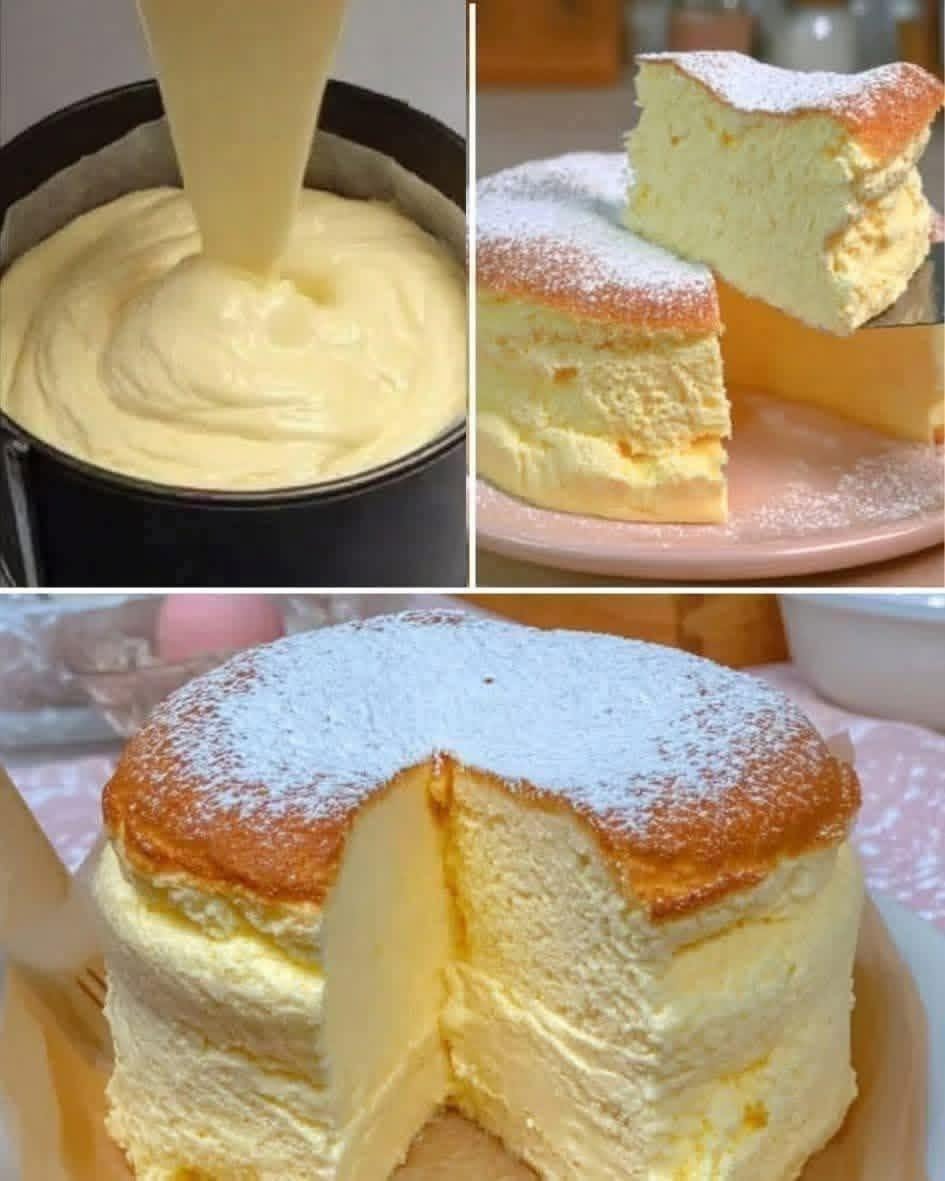
At 50 minutes, check the color. The top should be golden brown.
The cake is done when a wooden skewer inserted into the center comes out clean or with just a few moist crumbs (not wet batter).
The cake will be tall, jiggly, and slightly domed.
10. Turn Off the Oven, Crack the Door (The Secret Step)
This is the step that prevents collapse.Cheese
Turn off the oven. Crack the oven door open about 2 inches (use a wooden spoon to hold it open). Leave the cake in the oven for 30 minutes with the door cracked.
This gradual cooling prevents sudden temperature changes that make the cake collapse.
11. Remove and Cool Completely
Carefully lift the springform pan out of the water bath. Remove the foil. Run a thin knife around the edge of the cake to release it from the pan.
Let the cake cool in the pan on a wire rack for 30 minutes. Then remove the springform ring and peel off the parchment paper.
Cool completely on the rack (about 1 more hour). For the cleanest slices, refrigerate for at least 2 hours before serving.
12. Slice and Serve
Use a sharp, thin-bladed knife. Wipe the blade clean between slices. Serve at room temperature (cold cheesecake hides the delicate texture).Baked Goods
Watch people's faces when they take the first bite. That look of surprise? That's the cotton cheesecake effect.
My Best Tips for Cotton Cheesecake Success
Use room temperature ingredients. Cold egg whites won't whip properly. Cold cream cheese won't blend smoothly. Leave everything on the counter for 1 hour before starting.
Don't open the oven during baking. Every time you open the door, cold air rushes in and the cake can collapse. Trust the timer.
The water bath is non-negotiable. This cake needs gentle, even heat. Without a water bath, the outside will overcook before the inside sets, and the top will crack.
Wrap your springform pan well. Double-layer heavy-duty foil. Some people use slow cooker liner bags or oven-safe baking bags. Do whatever it takes to keep water out.Ranges, Cooktops & Ovens
Don't overmix the batter. After adding the meringue, fold just until combined. Overmixing deflates the air you worked so hard to create.Dairy & Eggs
Your meringue should be stiff but not dry. If it looks curdled or grainy, you've over-beaten. Start over with fresh egg whites.
The cake will shrink as it cools. This is normal. It will pull away from the sides of the pan slightly. Don't panic.
If the top cracks: You probably baked too hot or too long. Or you skipped the gradual cooling. It's still delicious—just less photogenic.
The Classic Water Bath Method (Explained Simply)
Japanese cotton cheesecake is baked in a water bath (also called a bain-marie). Here's why and how.
Why: The water bath creates a humid, gentle heat that cooks the cake evenly from all sides. The steam prevents the top from browning too quickly and keeps the interior moist. Without it, you'll get cracks, a dry crust, and a dense center.Eggs
How: Place your springform pan (wrapped in foil) inside a larger pan. Pour boiling water into the larger pan. Bake.
Troubleshooting water bath issues:
Water leaking into the pan? Your foil wrapping wasn't tight enough. Double-wrap next time.
Water evaporated during baking? Your larger pan was too shallow. Use a deeper pan or add more water at the start.